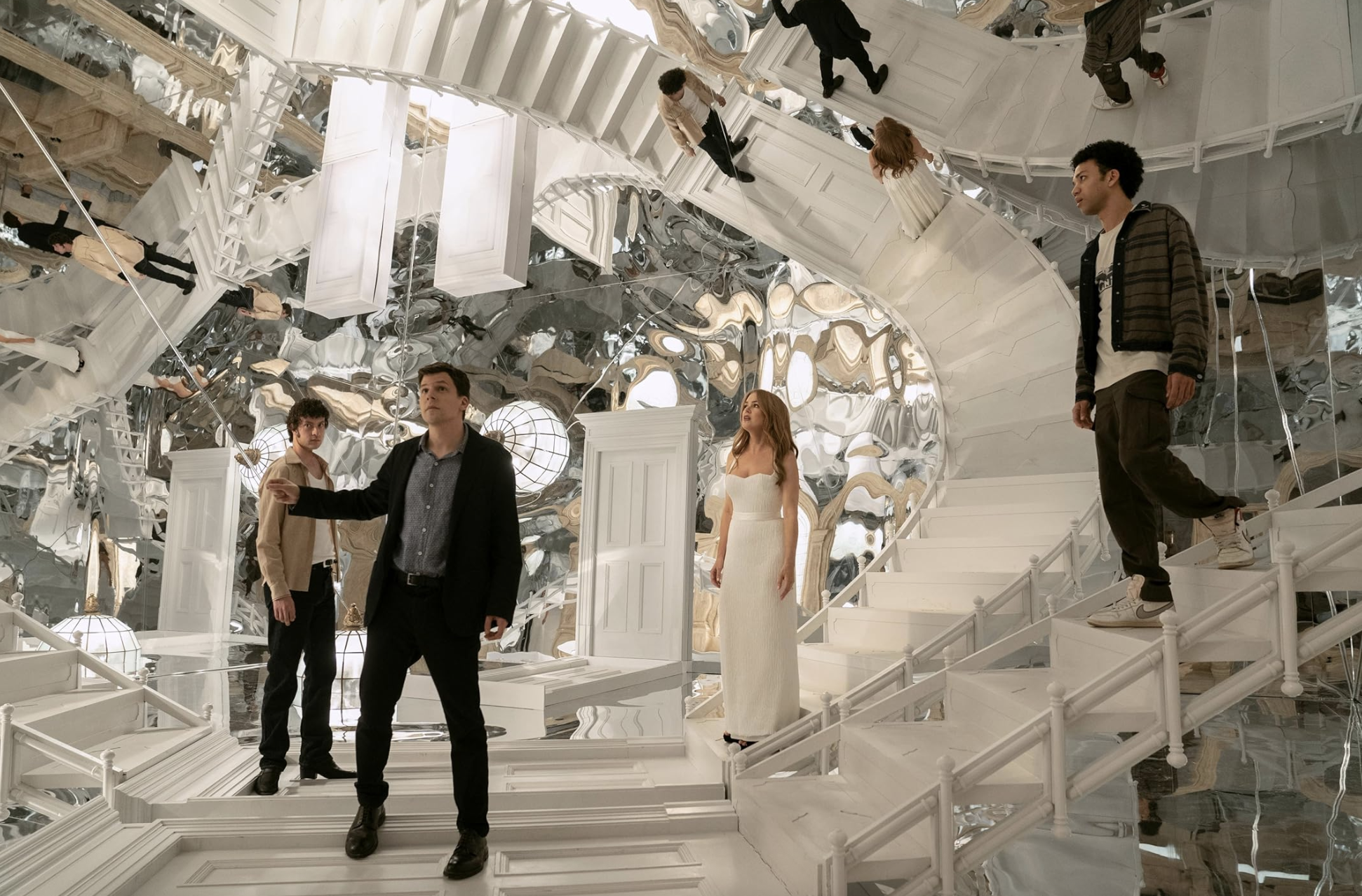
“Now You See Me: Now You Don’t”, released Nov. 13, marks the long-awaited third installment in the illusion-driven heist franchise. Following 2013’s “Now You See Me“ and 2016’s “Now You See Me 2”, the new film attempts to bridge the energy of the original ensemble with fresh faces and a newly globalized setting. The result is a movie that’s often fun and occasionally brilliant, but also struggles with uneven writing and an overstuffed script.
Narratively, the film positions itself as the Horsemen’s most significant and boldest heist yet, a somewhat humorous claim considering they said the same thing in each previous movie. Still, “Now You See Me: Now You Don’t” works hard to expand the mythology of the eye while introducing a younger generation of illusionists whose presence becomes central to the major twist.
The story folds into the larger franchise by bringing together old and new characters, working well to evolve the team dynamic and make the four (sometimes five) horse riders into seven. At times, this fusion works beautifully; at others, it makes the film feel stiff, as if it hasn’t fully settled into what it wants to be.
One of the movie’s most noticeable weaknesses is its writing. The younger characters, introduced as prodigious recruits, seem to know far too much, far too quickly. While this eventually ties into the twist, the early dialogue feels forced — almost as if parts of the script were written by someone unfamiliar with natural conversation. Some scenes sparkle with clever banter and smart sleight-of-hand setups, but others land awkwardly and disrupt the film’s rhythm.
Ariana Greenblatt’s character, in particular, leans heavily into overused Gen Z stereotypes: the snarky, hyper-aware eco-critic who performs an edgy detachment while still caring too deeply. Greenblatt brings charisma to the role, but the writing sometimes seems to reduce her character to a collection of traits rather than a fully realized person. Even when pacing stiffens, the charm of seeing the franchise’s veterans interact with the new generation provides a welcome spark.
Despite these shortcomings, the film shines in moments that reunite the original Horsemen. Seeing the familiar cast share the screen again — older, slightly changed, but still unmistakably themselves — creates a warm undercurrent of nostalgia. The film also taps into current cultural trends by weaving in Formula 1 and motorsports references, an unexpected but timely addition given the sport’s surging popularity in the U.S.
The main twist, while clever, lands just shy of anticlimactic. It is not expected, but not surprising. Within the film’s logic, however, it proves satisfying. It recontextualizes the narrative without feeling cheap, offering the story a stronger thematic landing than its middle act might suggest.
“Now You See Me: Now You Don’t” is a film full of charm, magic, and spectacle, but it also shows the strain of trying to reinvent itself while holding onto what made the first two movies special. It is nostalgic, ambitious, messy, and occasionally brilliant. Longtime fans will find plenty to enjoy and plenty to critique. The film ultimately succeeds in delivering the flashy fun the franchise promises, even if the illusion doesn’t always hold up under close inspection.