Emotions can be quite overwhelming. Especially when global events collide with one’s personal experiences. For many, this strain can take a toll on mental well-being.
Some people resort to physical activities such as exercising, taking strolls or hiking. Others go for something calming like meditation and mindfulness, connecting with nature, music, movies or anything they find to be effective.
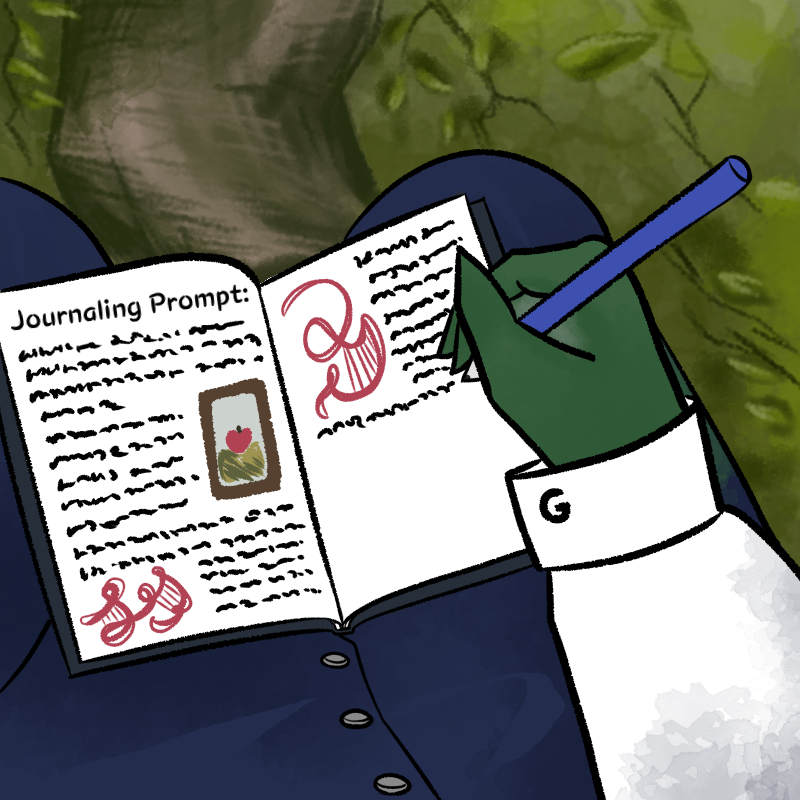
Out of many strategies, journaling is one of the most effective tools outside of talking to a trusted individual or professional. Those who need some help processing emotions or managing anxiety often turn to journaling, as it offers a way to understand and process their feelings better.

Thoughts that circulate in our brain can be jumbled or tangled, making it hard for us to make sense of them. When ideas are written down, they become untangled and easy to decipher as they provide a visual representation which can be understood better.
Experts refer to this process as “affect labeling” or putting feelings into words. It serves as an emotional regulation method that can help people work through any negative emotions.
In a meta-analysis study led by Monika Sohal, a researcher at the University of Calgary in Alberta, Canada, and her team, they searched major medical databases and looked through about 20 randomized trials. The researchers found a five percent reduction in overall symptom scores. They also found that anxiety decreased by nine percent, PTSD symptoms by six percent and depression symptoms had a lesser reduction by two percent.
Researchers doubted whether this was clinically significant but stated that effects would be better if journaling continued for a longer period and entries were kept private. Overall, the analysis suggested that journaling can improve some symptoms if paired with other treatments.
Journaling is, in fact, an effective tool, but it may also feel overwhelming for those trying to decode complex emotions. Understanding how to journal in a way that fits one’s needs is essential. Sometimes trying to just go with the flow or dumping thoughts onto a notebook can help, similar to venting to a friend.
However, it is also very important to self-reflect after free-writing. Without it, there’s a possibility of looping back into negative thought patterns.

Separating venting from analyzing could also be beneficial. After venting, one can return with logical reasoning to examine the thoughts written.
Journaling does not have to be perfect; it can be messy and unstructured. Going along as thoughts come to mind and following a free-flow writing can give one some mental clarity. While writing down in a simple venting manner, trying to achieve perfection and grammar can make the process more stressful.
Starting from smaller to bigger topics while working to get to the core of the problem might reduce the pressure from heavy unresolved issues.
Because constant negative reflection can feel draining, ending a journaling session with something positive or a silver lining to the written events would help balance the emotional load.
While it is a good method of expressing emotions and processing, expressive writing paired with other forms of treatment or help is needed to have better mental outcomes.
James Pennebaker, a well-known social psychologist and professor of psychology emeritus at the University of Texas at Austin, discussed in an interview how expressive writing can be beneficial for mental health.
Pennebaker stated, “I think therapy is a great alternative, or jogging or talking to a friend. I also think writing works wonderfully in conjunction with therapy. And I would bet that a very high percentage of therapists actually use some form of writing in conjunction with therapy.”
Journaling is a meaningful form of expression. It can be very useful. Putting feelings into words and visuals like doodles, etc., can help to regulate mental health. Taking time to decode and later analyze those thoughts can help prevent emotional spiraling.
While it is a very effective measure, journaling alongside other interventions has been a smoother and better approach at managing mental well-being. It does not need to be perfect, but just a form of venting and a safe place for those struggling to be well mentally.