I work at the Houston Botanic Garden, where I ride a golf cart around the property in the mornings to collect any natural debris or trash. However, on the August mornings of this year, my eyes were more often than not on the wild grapevines that grow in the back of the Coastal Prairie Loop. These sweet, tart beauties grow all across Houston, and you’ve probably seen them growing up a tree along a highway or on a friend’s property without knowing it. Neither did I, and this is where having good friends comes in.
I saw these vines hanging in a lush arc over the walking path in what I initially thought was a trap for foolish foragers. Wrong. My friend at work told me they were completely edible. Later that day, we crossed paths in our golf carts, his loaded with gardening tools, mine with two-stroke string trimmers and a blower. He handed me a perfectly spherical purple fruit. “Yeah, try one,” he said, right before popping one into his mouth. I followed suit. We sat there chewing the seedy fruit, mouths puckered ever so slightly, and with a tilt of the head and a shoulder shrug, we agreed that they weren’t half bad. We spent countless hours of company time discussing fruit and plants that had nothing to do with our specific jobs.
At this time, I had just started and was rather shy, looking for something to put my energy into. It was very clear what I was to do: I was going to make wine and see if I could spark some deeper connections with my coworkers.
If anything is a teacher in this life, it’s gardening. And if you’re fortunate, you can get the most rewarding part of it without any watering: through foraging. Savviness is an alternative to good fortune, as you can go to fallenfruits.com, where contributors post exact locations of wild fruit and nut trees and bushes with photos.
After a few minutes on Google, I was on my way to a brewing store surprisingly close to my apartment in southeast Houston. Inside, I was greeted by an older man wearing a veteran’s cap. He was drinking a splash of beer in a clear plastic cup, and we got to talking. I loved hearing him speak about his start in brewing, when he would squeeze the fruit of choice by hand to extract all the flavonoids. He shared his knowledge about the history and technical aspects of brewing: farm brews, yeast—both natural and artificial—temperature control, and lagers versus ales.
After a while, I remembered that the grapes weren’t going to pick themselves and politely wrapped up our conversation. The connection didn’t stop there; the man at the counter took me to the back, where he was brewing his own beer using what looked like equipment on par with that of a pharmaceutical factory: stainless steel, LED monitors and gauges everywhere. I left with my simple equipment, assured that if I needed any help at all, I could stop by or call. I left feeling like I’d made both a friend and a mentor.
I headed straight back to the garden, and after arriving at the vines, about two hours passed as a sturdy reusable plastic grocery sack filled up with bunch after bunch of dark purple Mustang grapes. It was as if the vines were pulling the stress out of me as I picked the grapes from them.
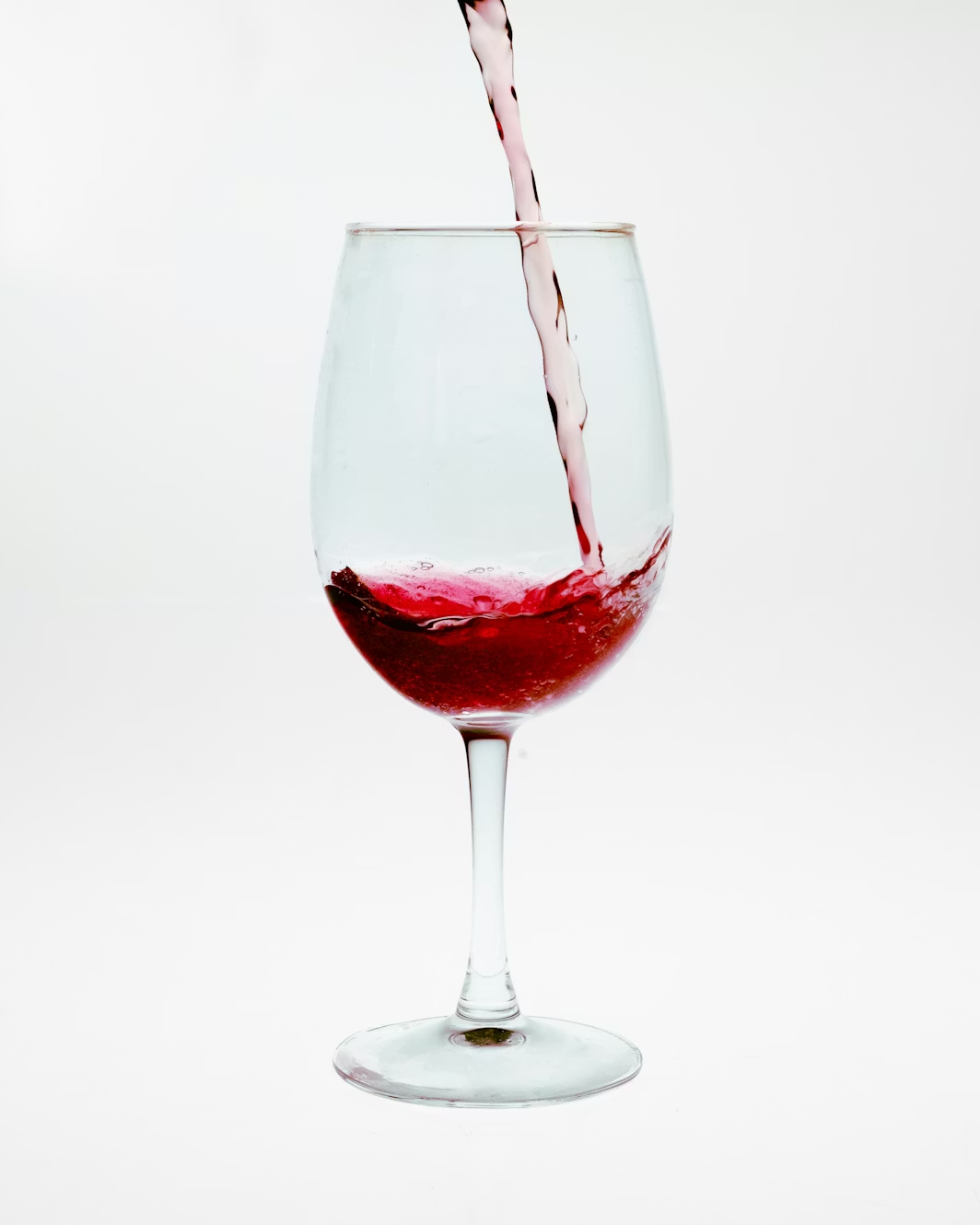
After mashing the grapes and adding yeast in my tiny apartment kitchen during a two-hour inner monologue, the grapes were in their vessel. In six months, the concoction would be ready.
During those six months, I had one friend who was consistently there. He worked in the garden with me, and we checked on the vessel every time he came over, just for fun. There was always something to talk about with the vessel in the doorless closet, mainly food and the cottage-style projects we had taken up since then. Soon, he wanted to be more involved, and we brewed our own mead using only honey, raisins, yeast and water. We were inspiring ourselves, seeing what we were capable of doing with our own minds and hands.
I don’t brew as much now, but the lessons stayed with me. The process reminded me that learning doesn’t always come from classrooms or screens. So next time you’re thinking about how to spend a weekend, try something new. Look around for the vines, herbs or plants that grow in your neighborhood or on your campus. Talk to the people who notice them, too. The results might take time, but what you learn in the process is about patience, craft and community that can last much longer than anything money buys.