















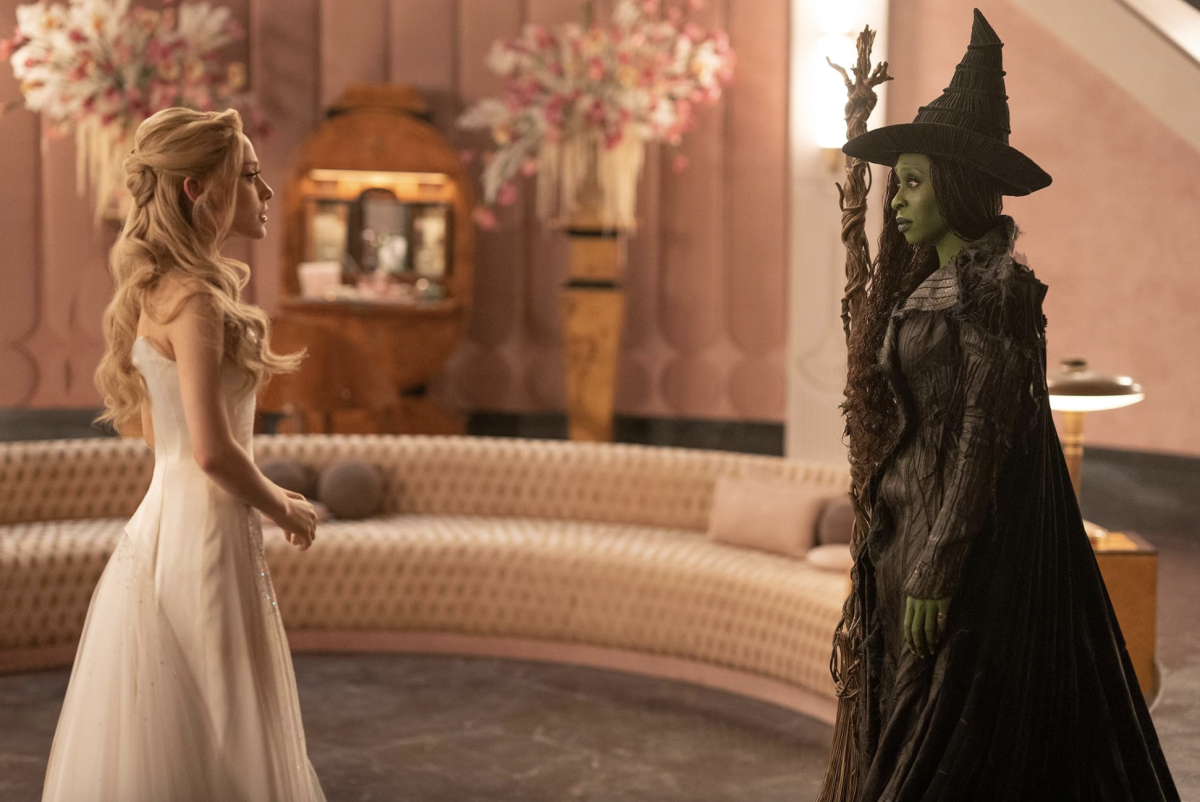
The Wicked universe has always thrived on reimagining a classic, and first adapted from Gregory Maguire’s 1995 novel, “Wicked” reframed “The Wizard of Oz” by centering the lives of Glinda and Elphaba long before Dorothy’s fateful arrival. The stage musical in 2003 expanded that vision, turning the witches’ relationship into a global theatrical phenomenon. Now, with the release of the new film—” Wicked: For Good”—the story closes a chapter that began on Broadway more than two decades ago and on-screen just last year.
Released this November, “Wicked: For Good” concludes the film duology that began with “Wicked: Part One.” The sequel slips so naturally into the story that it becomes difficult to tell how much time has passed. The transition feels nearly seamless — it could be days, months, or years later. The narrative allows for each possibility without disrupting tone or momentum.
As a companion to the first movie, the new film strengthens the emotional and thematic threads introduced in the first. Its writing, pacing, and performances integrate smoothly with the earlier film, building toward the final revelations fans have long anticipated. In visually rich sequences and standout musical numbers, the sequel not only honors the original story but also elevates it.
In relation to the stage musical, both film installments maintain an impressive fidelity to the story’s heart. The movies adapt beloved material with restraint and respect while still embracing the freedom that film offers. The new songs and moments introduced in “Wicked: For Good” blend naturally with the familiar score, adding depth rather than distraction, and fans of the musical will recognize the care taken to preserve the Glinda-Elphaba dynamic and the core themes of power, perception, and sacrifice.
The immense character development shown over such a short time is impressive, with dynamics changing drastically but in ways that seem logical given who the characters were beforehand.
As a finale, “Wicked: For Good” lands with heart-wrenching beauty. The cinematography, costume design, acting, and vocal performances create a lush, emotionally charged experience that mirrors the musical’s sweeping scope — the small embroidered details in an outfit or the shadow of a character that foreshadows their fate. Additionally, the decision not to show Dorothy—consistent with stage tradition—keeps the focus where it belongs: on Glinda and Elphaba, their fractured friendship and their intertwined destinies. This topic (including the actress who was to play Dorothy) was extensively discussed in the year between this film and the first one. The film’s great twists and reveals are executed with precision; those not familiar with the story may never have seen them coming, even with the intricate details that hint at them. The movie’s ending beautifully reflects the beginning of the first, in a way that feels deliberate, poetic, and true to the story’s spirit.
Together, the two films form a cohesive duology that honors both the stage production and the legacy of the original “Wizard of Oz“. “Wicked: For Good” doesn’t just conclude the narrative—it completes it.